CFRT
Curative or Adjuvant Treatment
10–20Sessions
Mon–ThuSchedule
3–5 weeksDuration
The most common protocol for post-surgical cases, spinal and brain tumors. Each session is outpatient — your pet goes home the same day.
Radiation therapy is one of the most effective tools in veterinary oncology. At Animal Alliance, it's the only thing we do — and we do it with the expertise, technology, and personalized care your pet deserves.
Radiation therapy uses precisely focused high-energy beams to damage cancer cells and prevent them from growing. Each treatment plan is designed individually — tailored to the tumor type, location, and your pet's overall health and quality of life.
Highly targeted. Radiation is directed with precision at the tumor — advanced planning technology shapes the beam to protect surrounding healthy tissue.
Outpatient. Each session is delivered under short general anesthesia. Most pets go home within hours and resume normal activity quickly.
Personalized. No two tumors — and no two patients — are the same. Every plan is built from scratch based on your pet's specific case.
Collaborative. We work closely with your veterinarian throughout the entire process — coordinating care and keeping everyone fully informed.
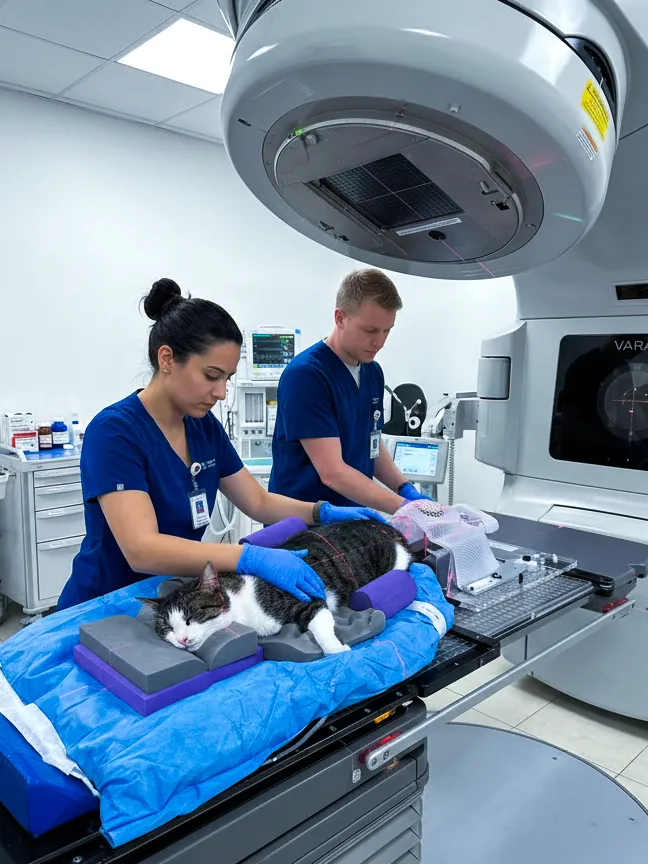
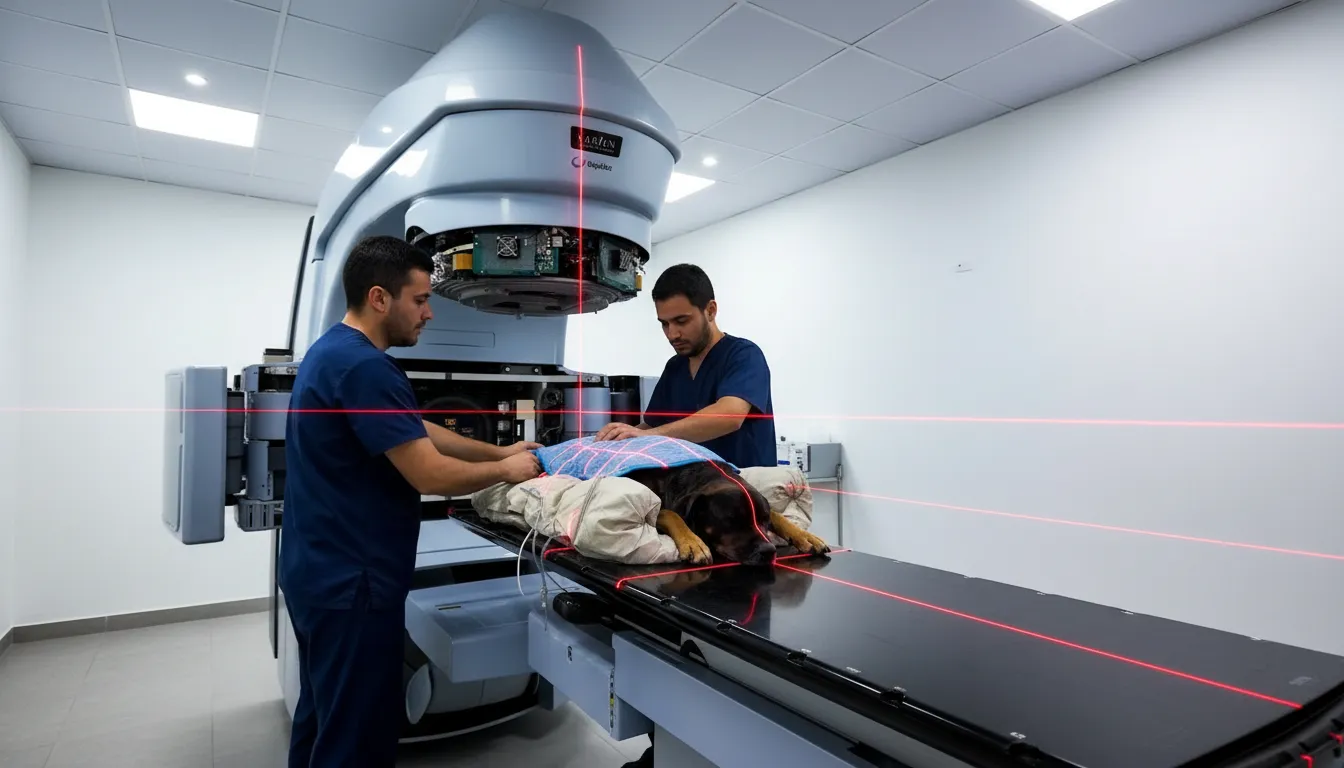
Our center is equipped with the Varian TrueBeam® linear accelerator, an advanced radiation therapy platform used in leading human cancer centers around the world, adapted for veterinary radiation oncology. Precision, safety, and shorter anesthesia times — for every patient.
Every treatment begins with Cone Beam CT (CBCT) imaging to confirm accurate tumor positioning, allowing radiation to be delivered with exceptional precision while minimizing exposure to surrounding healthy tissue.
The machine rotates around the patient while continuously delivering radiation — highly conformal treatments, better tissue protection, shorter treatment times, and shorter anesthesia for our patients.
A high-resolution multileaf collimator (MLC) precisely shapes the radiation beam to match each tumor's unique geometry, enabling our advanced radiation therapy treatment techniques while minimizing radiation exposure to surrounding healthy tissue.
Multiple beam energies allows precise treatment of both deep-seated and superficial tumors, including brain, nasal, spinal, oral, skin, and soft tissue cancers.
From brain tumors to soft tissue sarcomas, radiation therapy is an effective option across a wide range of diagnoses in dogs and cats. Our Radiation Oncologist will evaluate whether radiation therapy is appropriate for your pet's specific case.
Radiation therapy serves three distinct clinical goals. The intent — curative, adjuvant, or palliative — is determined by our Radiation Oncologist based on each patient's tumor type, stage, and quality-of-life priorities.
Radiation therapy is used as the primary or definitive treatment — often for tumors that are not surgically accessible, or where surgery alone cannot achieve adequate margins. The goal is long-term tumor control or remission.
When surgery removes most of the tumor but clean margins cannot be confirmed, radiation therapy targets any remaining microscopic disease — significantly reducing the risk of local recurrence and extending disease-free survival.
When long-term tumor control is not the primary goal, radiation therapy can meaningfully reduce pain, tumor pressure, or bleeding — improving comfort and quality of life for pets with advanced or inoperable cancer.
Intent shapes the protocol. Our Radiation Oncologist determines the right approach after reviewing your pet's complete case with your veterinarian.
Each protocol is selected by our Radiation Oncologist based on tumor type, location, stage, and quality-of-life goals — after a thorough, personalized case review.
Curative or Adjuvant Treatment
The most common protocol for post-surgical cases, spinal and brain tumors. Each session is outpatient — your pet goes home the same day.
Stereotactic · High-dose precision
High-dose stereotactic radiation is delivered with submillimeter accuracy in fewer sessions. Preferred in cases when maximum precision and minimal treatment time matter most.
Improve quality of life · Alleviate pain
Lower-intensity radiation focused on pain relief, improvement of function, and tumor control. Maximize quality of life for advanced or inoperable disease. Fewer sessions, weekly schedule — meaningful improvement without an intensive treatment course.
Protocol selection is determined by our Radiation Oncologist after reviewing your pet's complete case.
From the first consultation to final follow-up — here's how the radiation therapy process works at Animal Alliance.
Our Radiation Oncologist personally reviews your pet's imaging, pathology, and medical history. You receive a clear, honest recommendation — with no jargon and no pressure.
A dedicated CT scan maps the tumor and surrounding anatomy in 3D. Our dosimetry software calculates the precise dose distribution — maximizing tumor control while protecting healthy tissue.
Each session is delivered under short general anesthesia. The radiation beam is shaped and directed at the tumor with submillimeter precision. Your pet goes home the same day.
We monitor your pet throughout treatment and keep your veterinarian fully informed at every step. After treatment, we provide a detailed written case summary.
Whether you've been referred by your veterinarian or are reaching out directly, we're here to help. Our Radiation Oncologist reviews every case personally and will guide you through all available options — with honesty and no pressure.
We complement your care — not replace it. Our role is exclusively radiation oncology. Your patient returns to your practice with a full treatment summary and the relationship you've built remains intact.
The clinical information on this page is grounded in peer-reviewed veterinary radiation oncology literature.
Have questions about radiation therapy for your dog or cat? Our Radiation Oncologist reviews every case personally. Reach out and we'll guide you through the next steps — with clarity and no pressure.
The only center 100% dedicated to Radiation Oncology in Florida — exclusively focused on advanced veterinary radiation therapy for companion animals.